
Imagine you are in grade school and the note you are passing to someone is intercepted by the teacher. You feel the panic escalating as you pray, “Please, please, please don’t let it be read out loud!”
The book of Revelation is a letter to seven churches. For some reason I thought that the seven churches each received their own letter, but that is not the case. The book of Revelation is one letter, passed from church to church. So the believers in each city heard not only what God had to say to them, they heard what God said to everyone else as well. That is great if your city receives praise, but what if your city is rebuked, and now everyone else knows it?
Welcome to Laodicea.
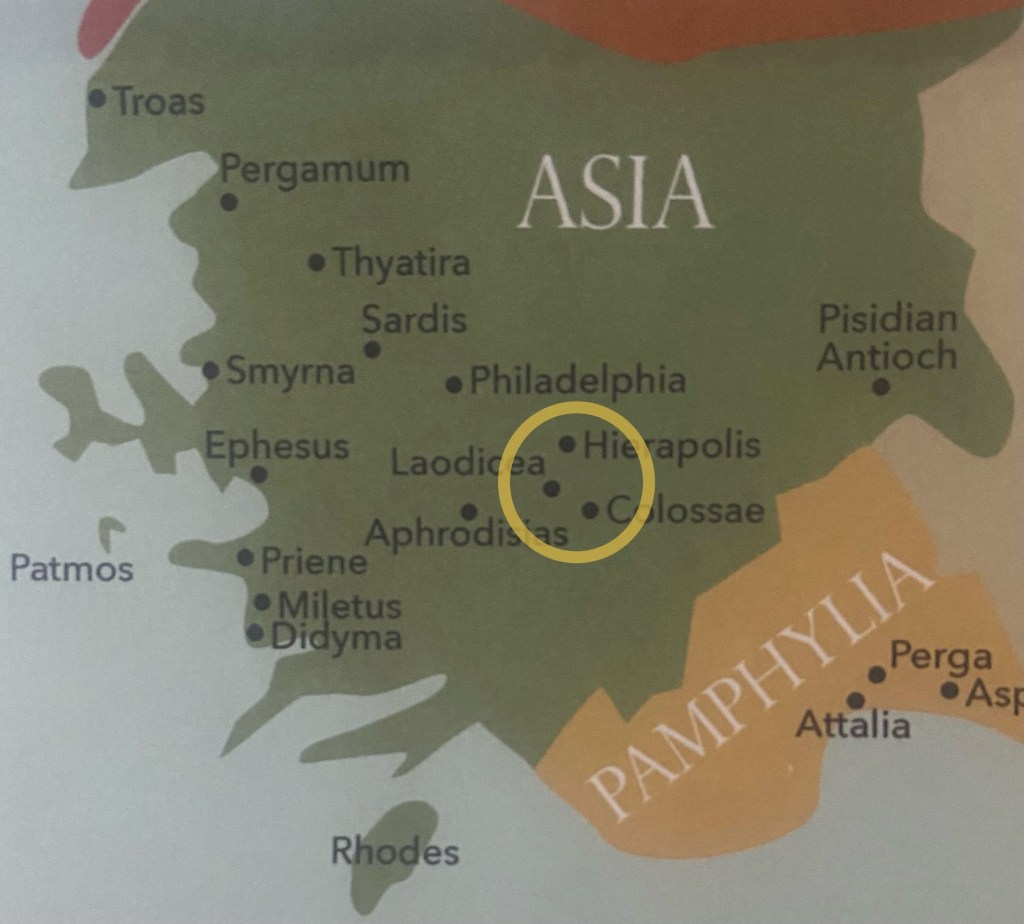
In a span of just sixteen miles along the Lycus River valley, in what is modern-day Turkey, there were three cities: Hierapolis to the north, Colossae to the south, and Laodicea in the center.
Colossae, oldest of the three, was already considered a great city in the fifth century BCE. Next came Hierapolis, established in the third century BCE, and finally, Laodicea made its appearance geographically between the two in 260 BCE.
It was the founding of Laodicea that eventually led to mighty Colossae’s demise…
Colossae was known for their cool, refreshing water, which flowed from nearby Mt. Cadmus. The Greek historian Strabo commented that much of Colossae’s income came from their flocks, specifically their wool. But not just any wool. A specially dyed wool.
The Colossians created a vibrant pinkish-purple dye from a plant root. The color, colossinus, is named after the city.

To the north, Hierapolis, which means “sacred city,” was home to the largest agora (market) in the ancient world. It was known for its hot springs, which to this day are said to have medicinal properties. With approximately 100,000 residents, it is no surprise that Hierapolis is home to one of the largest necropolis’ (ancient cemetery) in Turkey.
Laodicea was named after a person, the wife of Antiochus II. The city’s name combines the words meaning “the people” and “justice,” or “the people ruling.” Known as a commercial banking center, their king minted his own gold and silver coins. With its large stores of gold, Laodicea was considered the wealthiest city in Asia Minor.
What Laodicea lacked was good drinking water. It is uncertain if Laodicea actually tried to pipe in water from Colossae and Hierapolis, but regardless, their water was lukewarm and actually made people sick. On the upside, the minerals in the water made the wool from their black sheep very soft. With this in mind, lets look at the letter to Laodicea found in the book of Revelation:
And to the angel of the church in Laodicea write: ‘The words of the Amen, the faithful and true witness, the beginning of God’s creation. 15 ‘I know your works: you are neither cold nor hot. Would that you were either cold or hot! 16 So, because you are lukewarm, and neither hot nor cold, I will spit you out of my mouth’ (Revelation 3:14-16, ESV).
Notice how specific these words are to Laodicea. Not only did they have lukewarm water, they had lukewarm faith! The Greek word translated “spit,” emeo, actually means to vomit. Just as Laodicea’s water made people vomit, the population’s actions make God want to vomit.
‘For you say, I am rich, I have prospered, and I need nothing, not realizing that you are wretched, pitiable, poor, blind, and naked’ (Revelation 3:17, ESV).
In 60 CE, Asia minor was rocked by earthquakes. Rome offered to fund the rebuilding of cities in their empire. Laodicea was the only one to turn down Rome’s offer. They funded their own reconstruction, then minted a coin boasting about it. The coin read, “We did it on our own.” God points out that Laodicea is spiritually bankrupt. They are not to be envied, but pitied. They are clothed in their luxurious raven wool, yet God calls them naked.
Home of the most prominent medical school in the region, the doctors of Laodicea specialized in treatment of the eyes. In fact, the textbook written at the school was consulted for 1,000 years! Yet spiritually they are blind. God is tearing down everything this community prides themselves in.
‘I counsel you to buy from me gold refined by fire, so that you may be rich, and white garments so that you may clothe yourself and the shame of your nakedness may not be seen, and salve to anoint your eyes, so that you may see‘ (Revelation 3:18, ESV).
White symbolizes purity, a contrast to the fine black clothing that comes from Laodicea. And despite the healing eye salves that they are famous for, spiritually they are blind.
‘Those whom I love, I reprove and discipline, so be zealous and repent. 20 Behold, I stand at the door and knock. If anyone hears my voice and opens the door, I will come in to him and eat with him, and he with me’ (Revelation 3:19-20, ESV). Despite all their shortcomings, God still knocks. He still loves the people of Laodicea. That is why He is sending this rebuke. If the people “are ruling” their own lives as their name suggests, that means that God is not. They were doing what is right in their own eyes, not following God’s commands.
How often do we do the same thing?
That is why we find Jesus on the outside of the door, knocking, patiently waiting to be let in.
As Laodicea prospered, they took away business from Colossae. The city never regained its early prominence despite Rome’s funding of their rebuilding. They limped along until the 3rd century CE, when finally it was no more. And there sat Laodicea with all their riches, a mere ten miles away.
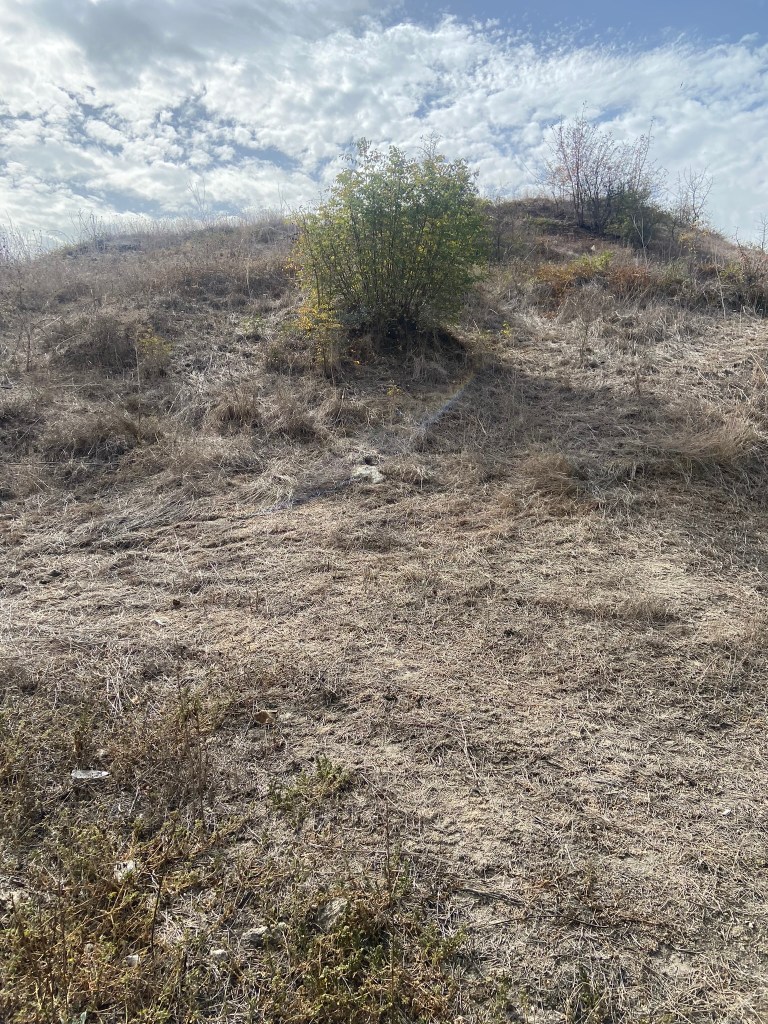
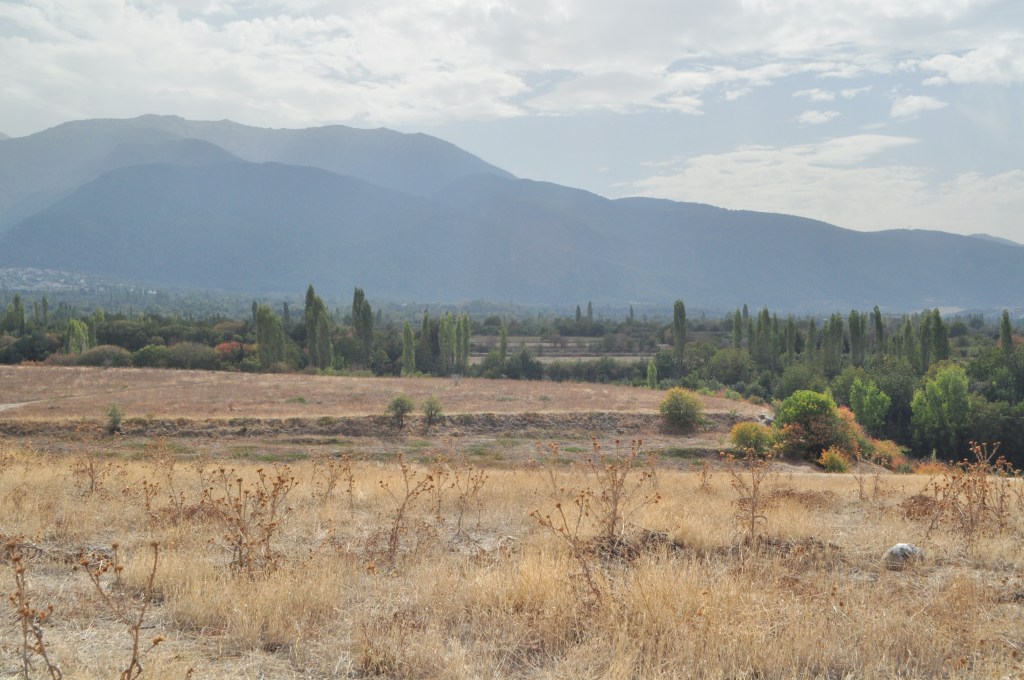
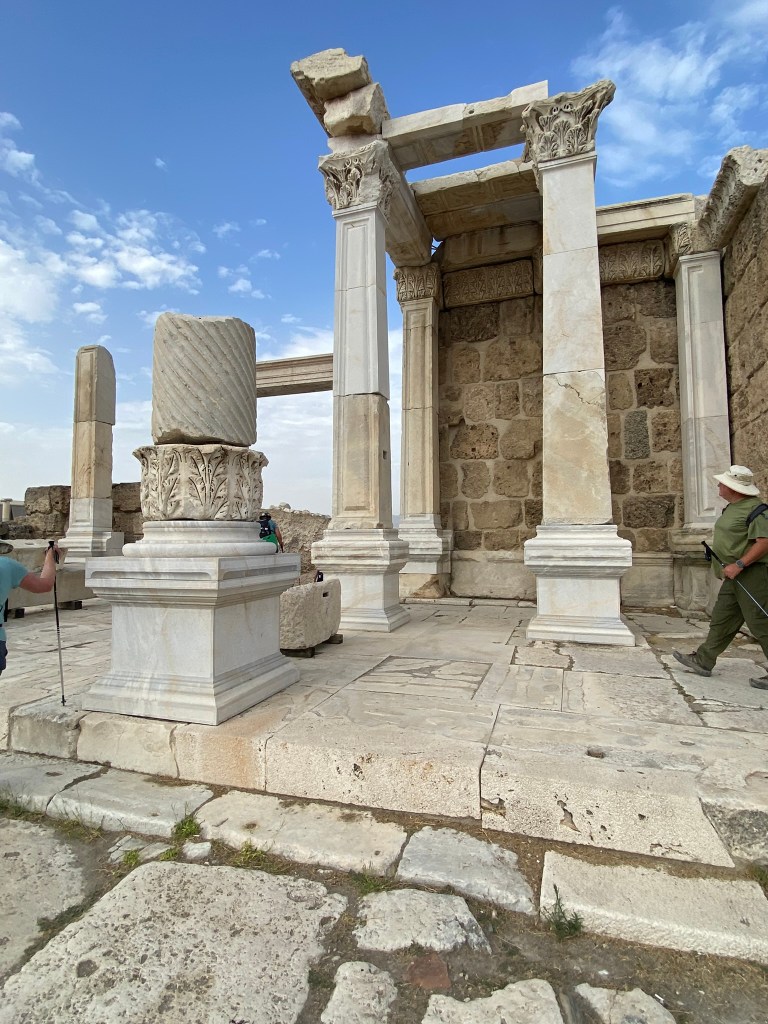
Today you can tour the ancient cities of Laodicea and Hierapolis. But Colossae is just a tell, a hill of dirt that still has not been restored.


 Lisa Lewis Koster
Leave a comment