
Have you ever wondered how ancient people kept track of time? As early as 3000 BCE, the Egyptians followed a solar calendar, which helped them predict the annual flooding of the Nile River. They named their sun god Ra and credited him with creating the universe, as well as creating the rest of their gods.
In my book “Enough,” I posit this might be one of the reasons why God instructed the Levites to always set up the Tabernacle with the Most Holy Place at the west end of the tent. With the entrance facing east, this forced the newly liberated Israelites to turn their backs on Ra as they entered the Tabernacle. This could also be why God based the Israelites calendar on the night sky.
The moon actually makes a better calendar than the sun because it goes through phases, looking a bit different every night. The ceremonial Jewish calendar begins on the new moon before Passover.
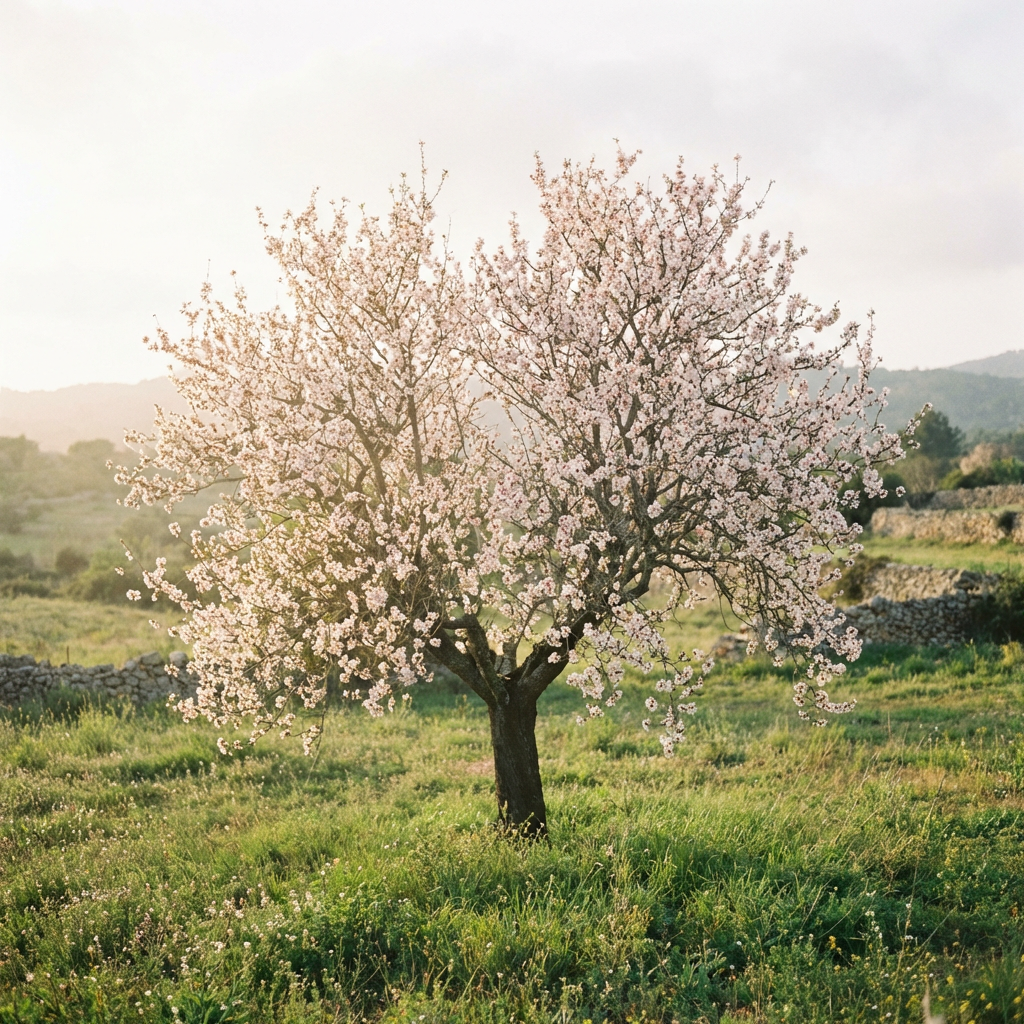
The ancient Israelites kept track of Passover by watching the almond tree. When it blossomed, they knew Passover would take place on the next full moon. The schedule for the remaining annual festivals is then set in relation to Passover.
On the tenth day of Nisan, the first month, each household was instructed to select a year-old male lamb (a ram) without any defects. On the fourteenth day, the lamb was to be sacrificed at twilight (Ex 12:3-6).
Did you ever stop to wonder why God commanded each family to keep their lamb for four days before sacrificing it? It isn’t because it takes that long to examine it. In the days of the Temple, the priests inspected a steady stream of lambs, one after another.
What would happen if you brought home a cute little lamb? How long would it take your children (or you) to make friends with it? Bringing a lamb home and immediately sacrificing it is merely providing a meal. But sacrificing a lamb that lived with you for four days will cost you something.
And that is the point.
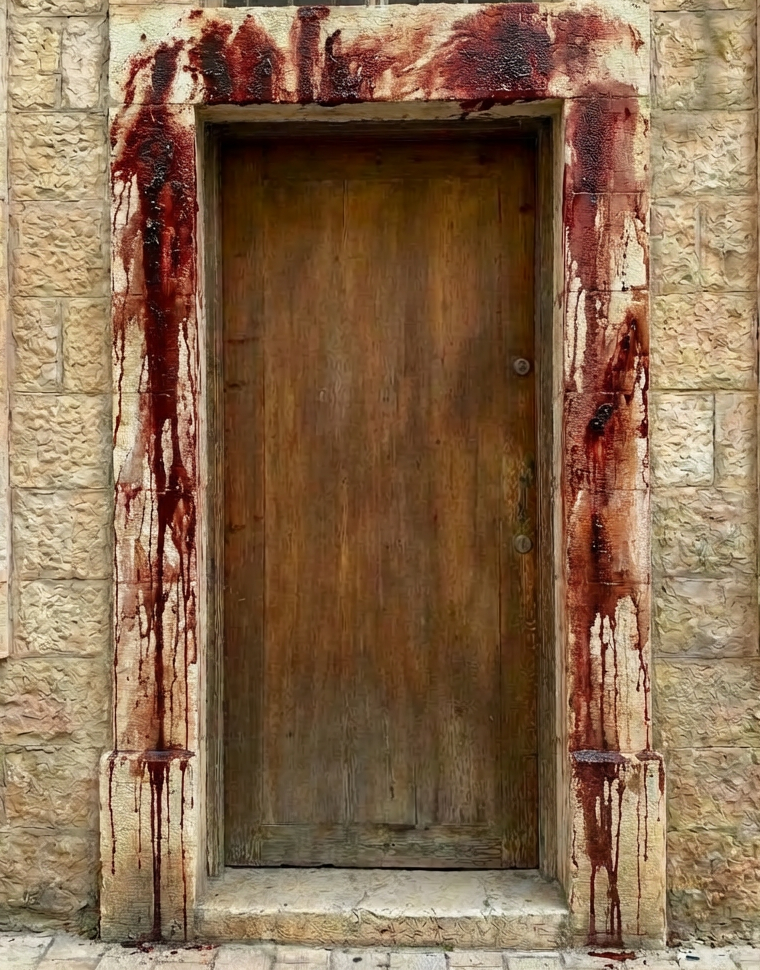
“Then they shall take some of the blood and put it on the two doorposts and the lintel of the houses in which they eat it” (Ex 12:7 ESV).
Did you know that the sacred symbol for Pharaoh is a ram? That changes things, doesn’t it? Painting with ram’s blood around your doorframe is a powerful statement of faith. The Egyptians are brutal, and if God doesn’t set you free, that’s going to be your blood up there.
They shall eat the flesh that night, roasted on the fire; with unleavened bread and bitter herbs they shall eat it (Ex 12:8 ESV). Reading this verse, I always pictured something out of a Western movie. Everyone gathered around a campfire with meat roasting on an iron spit. But I learned the spit couldn’t be made of metal, because any meat touching it “would be grilled by the metal rather than roasted by the fire… Interpreters prescribed the spits should be made of pomegranate wood, which was extremely dry and so would not cause lamb flesh to be steamed or boiled by trapped moisture.” (Scott Haan, The Fourth Cup)
Justin Martyr, writing in the second century, said not one, but two wooden spits were used. “For the lamb, which is roasted, is roasted and dressed up in the form of a cross. For one spit is transfixed right through from the lower parts up to the head, and one across the back, to which are attached the legs of the lamb.”
How did I not know this before?!
I will pass through the land of Egypt that night, and I will strike all the firstborn in the land of Egypt, both man and beast; and on all the gods of Egypt I will execute judgments: I am the Lord. The blood shall be a sign for you, on the houses where you are. And when I see the blood, I will pass over you, and no plague will befall you to destroy you, when I strike the land of Egypt (Ex 12:12-13 ESV).
The festival of Passover, celebrated on the 14th day of Nisan, reminds us how all of the firstborns of Egypt were killed but the firstborn of the Israelites were “passed over.” In other words, spared.
The festival of Unleavened Bread begins on the 15th day of Nisan and lasts one week. During this time, no yeast (leaven) is used in baking bread for leaven represents sin. The festival of First Fruits begins the day after the Sabbath following Passover. This means First Fruits always takes place on a Sunday.
“Jewish families would travel to Jerusalem with their sacrifices and ordinarily remain there for seven days, until Nisan 22. No work could be done during the feast (another parallel to Sabbath)… The week ended with the festival of First Fruits and the formal ‘waving of sheaf’ (a bit of wheat or barley) anticipating the harvest to come (Lev 23:10-14). Deuteronomy strictly prohibited the celebration anywhere but the place that the Lord will choose (Jerusalem), to make his name dwell there” (Dt 16:2 ESV).[1] By the time of Jesus, these three spring festivals were celebrated together and collectively called Passover. It wasn’t until after the Romans destroyed the Temple in Jerusalem that domestic Passover celebrations became common.
Are you interested in learning more about the Jewish Festivals? I have so much more to share! I will be teaching two sessions on the Festivals at The Well Conference, April 30-May 2. You can find more information here: https://seeyouatthewell.net/
[1] Gary M. Burge, Jesus and the Jewish Festivals (Grand Rapids, MI: Zondervan, 2012), 26-27.
 Lisa Lewis Koster
Leave a comment